

Nominated Launches
Every week a game blows up somewhere. A clip goes viral on X, a demo hits the top of itch, a Steam page racks up wishlists overnight. And every week the same thing happens next: someone in the trenches launches a token for it. The dev didn't ask for it, doesn't control it, and usually finds out when their mentions fill up with people asking if it's official.
I've watched this play out enough times to know it's broken for everyone. Traders end up holding a coin the dev will never touch. Devs get dragged into something that can hurt their game. And the one thing everyone actually wanted, a way to back a game early and get paid if it takes off, never happens.
So we built Nominations. It goes live on Tuesday 17 November at 9pm UTC.
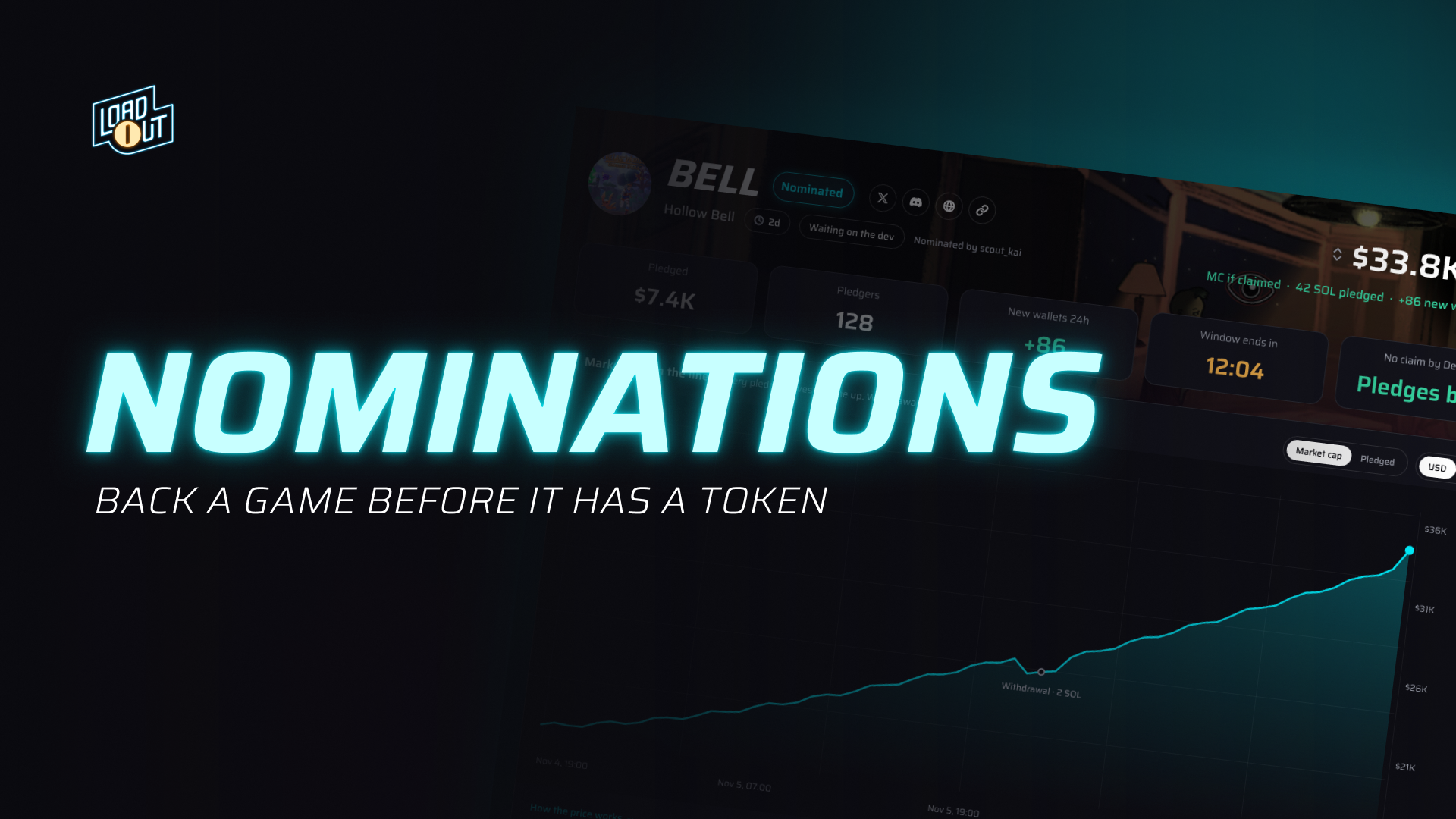
You pick the game. You pledge SOL into a pool for it. The pool shows the dev exactly how much is waiting for them. No token exists until the dev turns up and claims it. If they never do, you get your SOL back.
No token until the dev wants one
Talk to any indie dev about crypto and you'll hear the same fear. They don't want a coin with their game's name on it floating around that they never agreed to. Platforms delist games over less. Their players get scammed by copycats. And the moment a random token exists, the dev is stuck answering for it whether they like it or not.
That's the bit every other launchpad gets wrong. Launching a token for a game you don't own creates the exact problem the dev was trying to avoid.
Nominations flips it. A nomination is a pool of SOL sitting in escrow with a game attached to it. There's no mint, no ticker trading anywhere, nothing for the dev to clean up. The token only gets created when the dev proves they own the game and signs the claim themselves. If they pass, nothing launches and refunds start right away. If they ignore it, the pool expires after 30 days and everyone gets refunded.
So the dev gets a choice they've never had before. They can look at a live pool, see real money waiting, and decide on their own terms whether they want it.
How it works
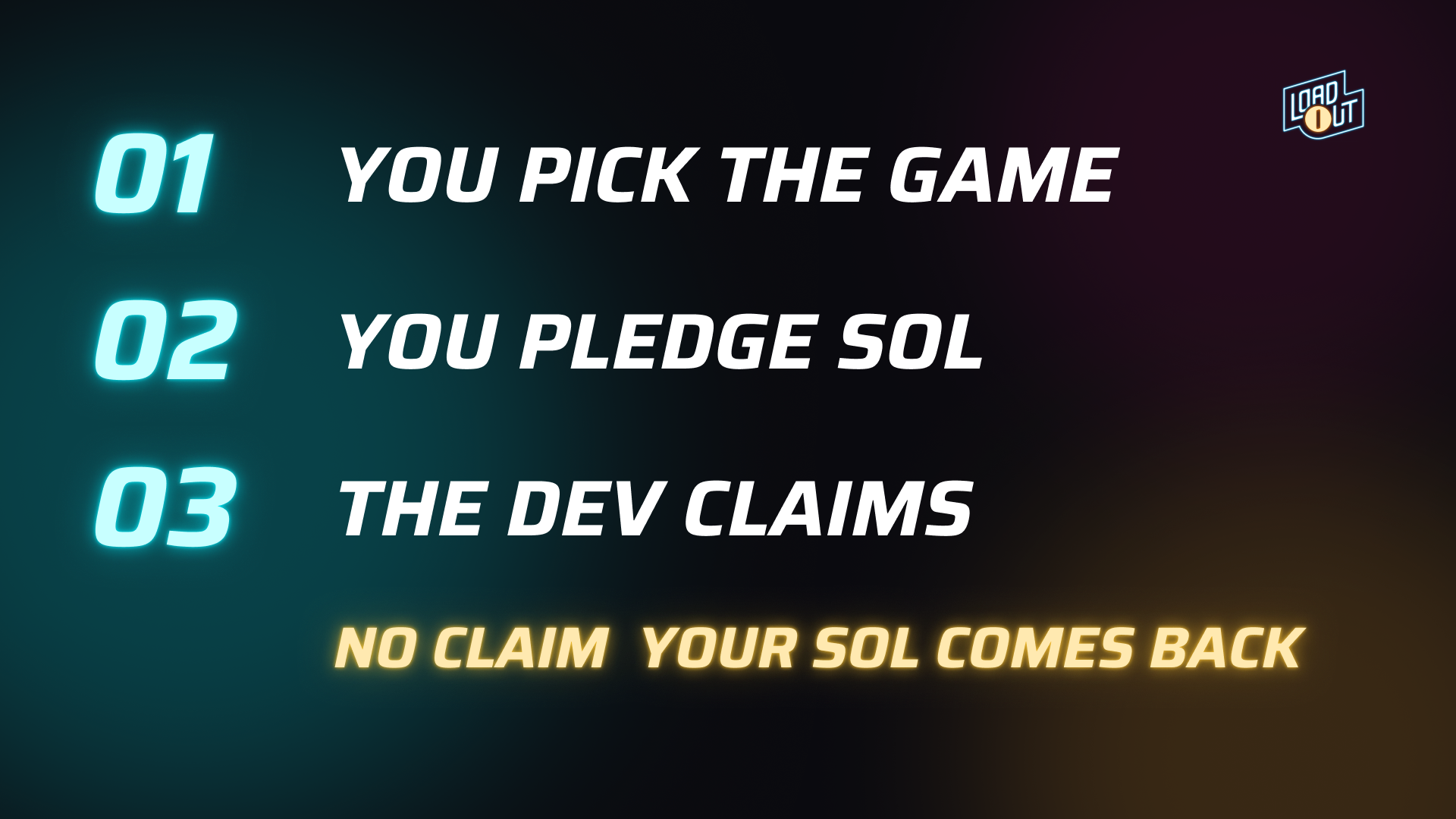
- Someone nominates a game. Anyone can do it. You add the game's name, a ticker and up to three links (its X, Steam page, site or Discord), pay a 0.05 SOL nomination fee and make the first pledge of at least 0.5 SOL. That pledge is yours like any other and lands in the cheapest window. One game gets one open pool, so nobody can spam copies.
- Traders pledge SOL. Pledges land in batch windows: every 5 minutes for the first hour, hourly until 24 hours, then every 4 hours. Every window has a price on the line, and the earlier the window, the lower the price.
- The pool page shows the dev their number. Anyone can see how much is pledged, how many wallets are in, and what the dev would walk away with if they claimed right now.
- The dev claims. They sign in with the game's X, the only account that can claim, then start the claim. The pool freezes for 15 minutes while it settles, so nobody can pull out from under the claim.
- The token launches. Every pledge fills at the price of its window. If less than 85 SOL goes into the token after the claim tax, it keeps trading on the Loadout curve. At 85 SOL or more it graduates straight into a Meteora pool with the liquidity locked forever.
- You collect your tokens. They sit in escrow under your wallet and you collect them whenever you want.
If no dev claims within 30 days, the pool closes and every pledger gets refunded.
Change your mind any time
This is the part I'm most proud of. Until a dev starts a claim, your pledge is yours. Withdraw whenever you want and the SOL comes straight back to your wallet in the same transaction. The only thing you lose is the 1% pledge fee you paid going in.
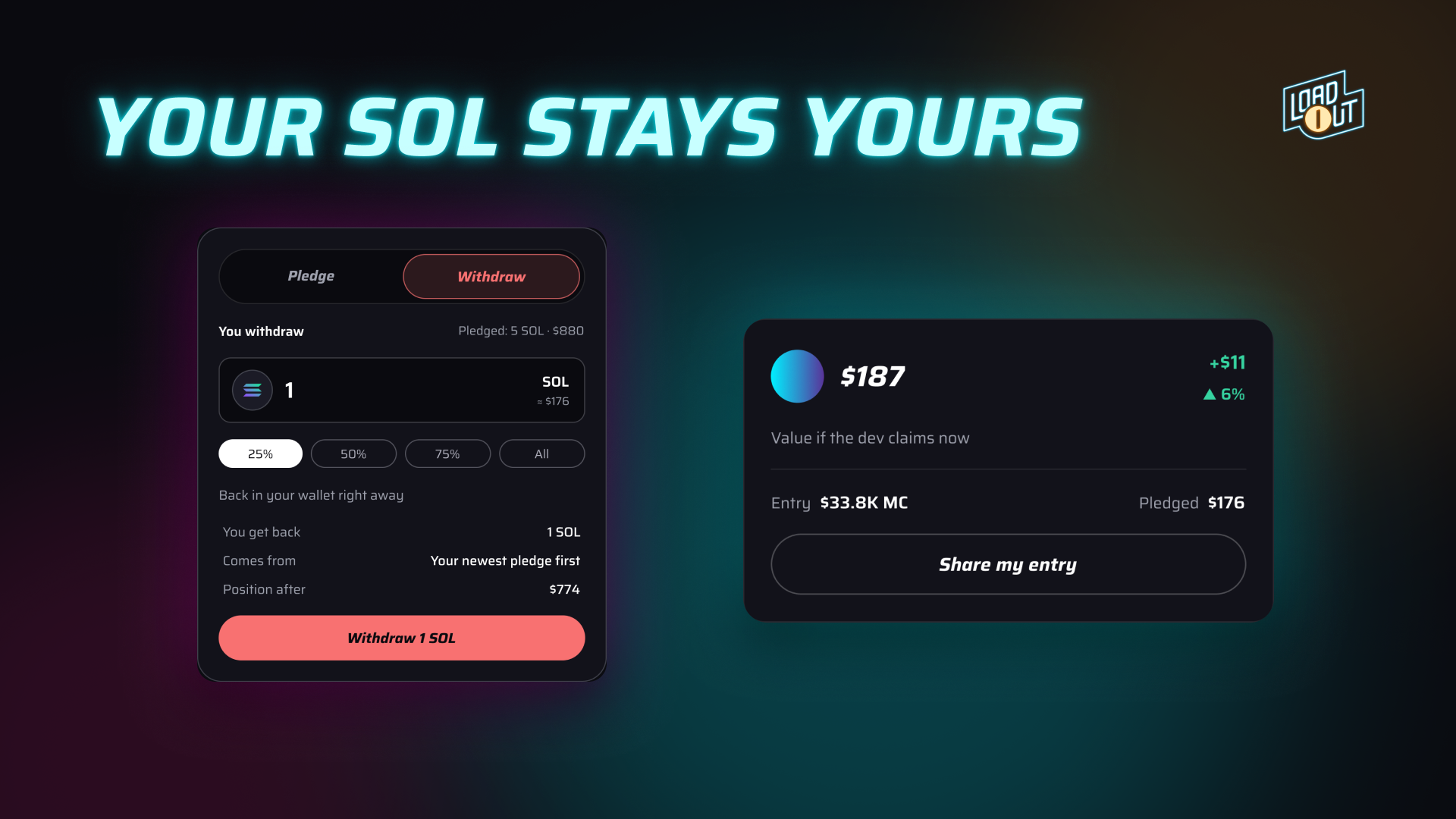
Think about what that means. On a normal launch you buy, and from that second you're exposed to everything: the dev selling, the snipers dumping, the chart going to zero while you sleep. Here you're backing a game with SOL that's still sitting in escrow. Pool not growing? Game went quiet? Found a better one? Pull it out and move on. It costs you 1%.
The one moment you can't withdraw is during a claim. When the dev starts it, the pool freezes for 15 minutes so the numbers they're claiming against can't change under them. If the claim doesn't go through, the pool unfreezes and you're back in control.
Same price as the snipers
On every curve launch the first block belongs to bots. They buy in the same second the token goes live, and by the time a human has clicked buy the price has already run. That's how the game works today and everyone knows it.
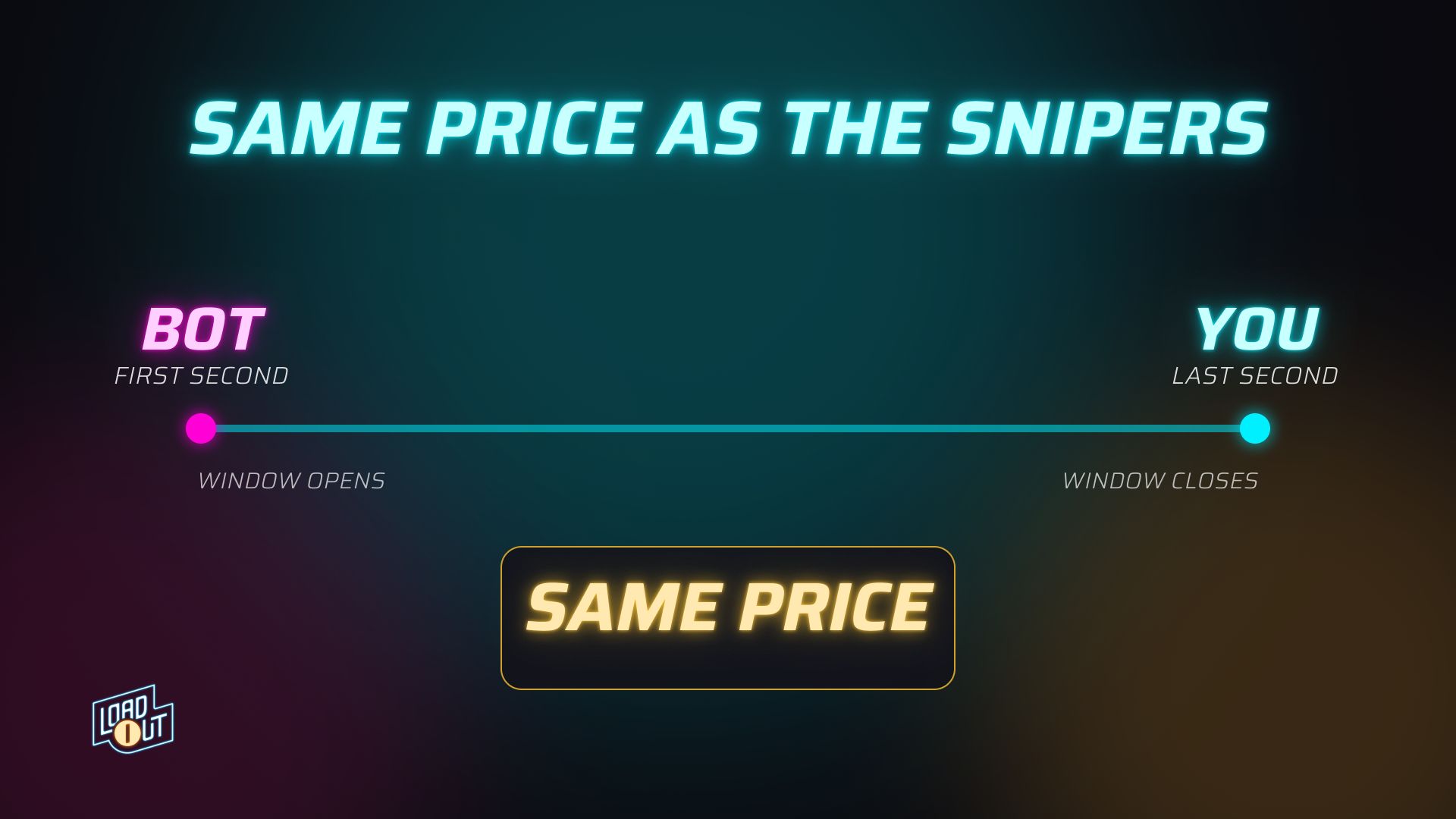
Nominations doesn't sell tokens one by one. Pledges are grouped into windows, and everyone in a window pays the same price: the average of that window's stretch of the line. A bot that pledges in the first second of a window gets exactly the same price as you pledging in the last second of it. Speed inside a window buys nothing.
But we're not naive enough to think someone who turns up five hours later should get the same price as someone who was there in the first five minutes. That model sucks for trenchers, and speculation is the whole point. The first windows sit lowest on the line, so the earlier you back a game, the better your position when it launches. Take a 1,300 SOL pool from our test scenarios, where half the SOL landed in the first window. Someone from that window can sell their bag straight after launch and walk away with about 7.8x.
And no window starts below what it paid at the launch price, the last one included. Someone who pledged hours later in that same pool gets about 1.14x selling their bag straight after launch.
That matters more than it sounds. A dev claiming is the catalyst. It's the moment everyone who's been watching from the sidelines has been waiting for, because the game is now official and the dev is in. Pledgers are holding from the cheapest prices on the line when that wave of buyers turns up.
So you're rewarded for finding the game early. Being a faster bot doesn't get you anything.
Why a dev would claim
Asking a dev to launch a token is a hard sell. Asking them to claim a cheque is a different conversation.
When a dev claims, part of each window's gain at launch goes to them as SOL. On pools of 100 SOL or more it lands 24 hours after the claim. The window that's further up pays more, and a window that pledged right at the launch price pays nothing. On a decent size pool that adds up fast. In the same test scenarios, a 600 SOL pool pays the dev about 121 SOL at the claim, and a 1,300 SOL pool pays about 372 SOL. And that's before trading fees: 1% of every curve trade goes to the dev, then half the pool fees once it graduates.
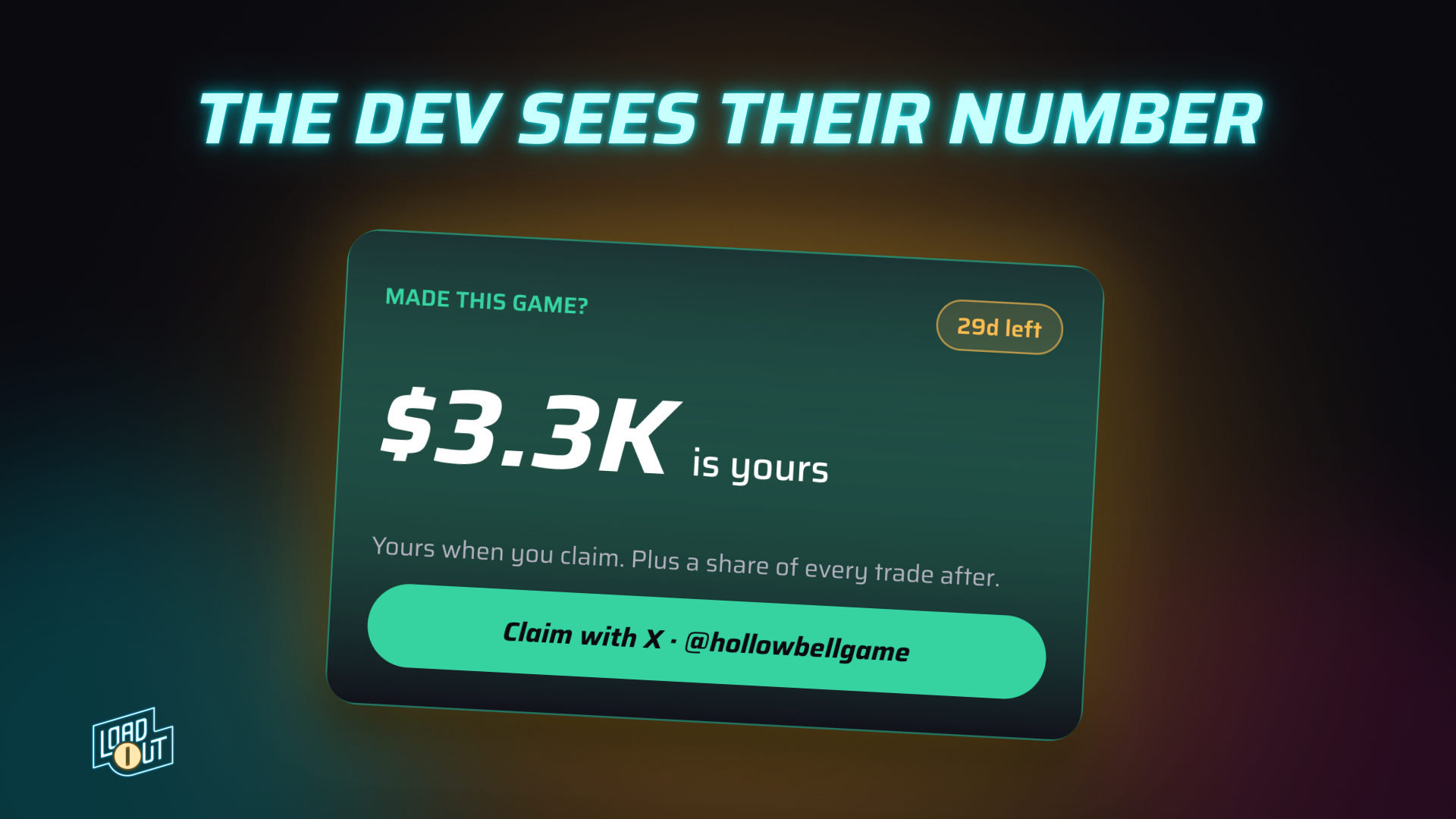
The pool page shows that number live, the whole time the pool is open. A dev doesn't have to believe us, or a stranger in their DMs. They can see the SOL sitting in escrow with their game's name on it.
That's the lever. The bigger the pool gets, the harder it is to ignore.
Keeping pools honest
The obvious question is what stops someone nominating a game, claiming it themselves and walking off with the dev's payout. A few things do.
Every pool has one claim account, the game's X, set when it's nominated. Only that X can claim. One game gets one open pool, so you can't spin up copies.
Then the community gets a say. Anyone signed in can give a pool's claim account a thumbs down if it looks wrong, or a thumbs up if it checks out, one vote per account.
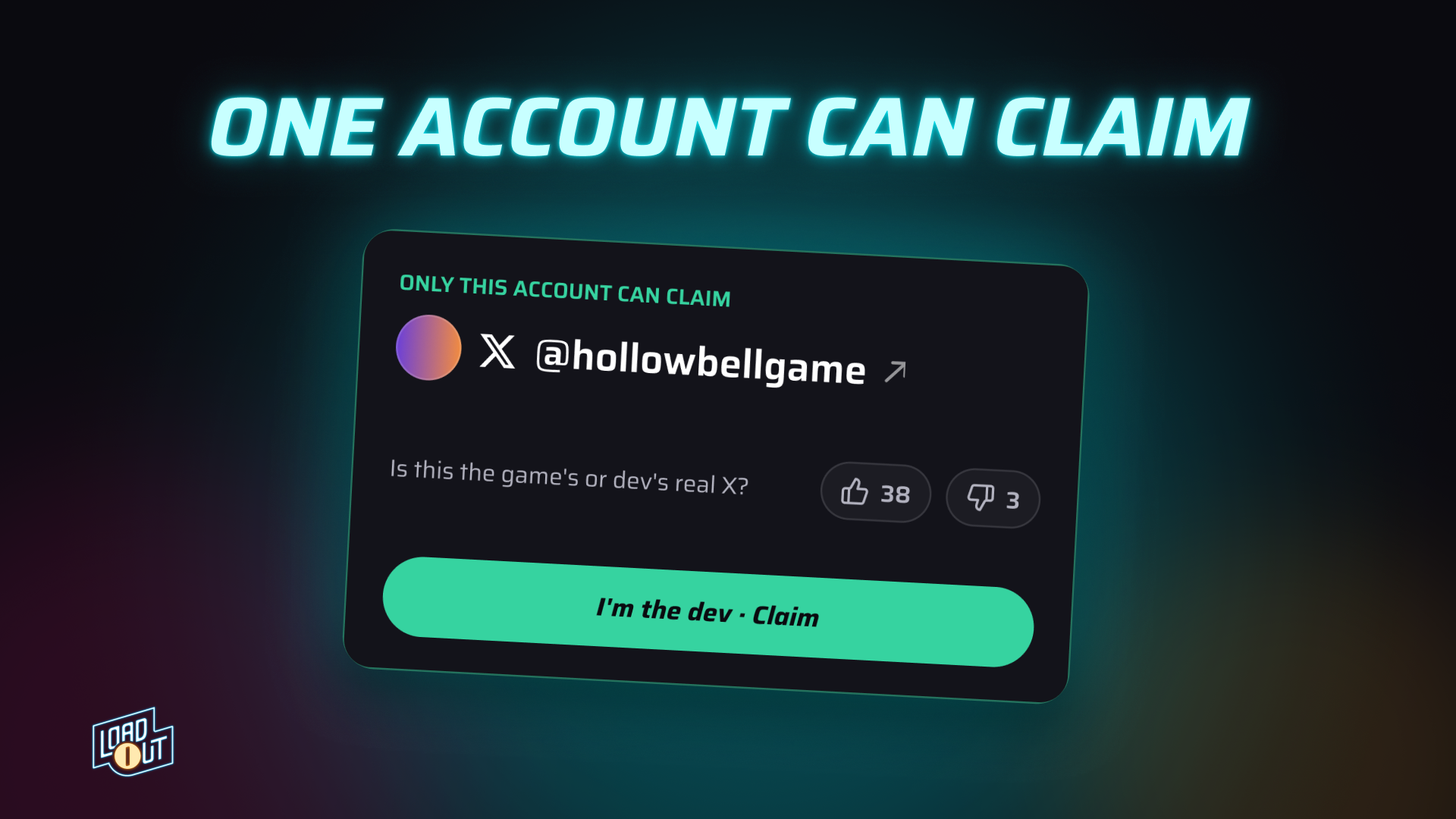
The votes don't decide anything on their own. They're an alarm bell, and a pool full of thumbs down gets looked at fast. If the account is wrong, we lock claiming and fix it before anyone gets paid. And on pools of 100 SOL or more, the dev's payout waits 24 hours after the claim, so even a claim that slips through can be stopped before a single SOL leaves.
How the claim tax works
The dev's payout comes from the pool's own run-up. Every pledge pushes the price further along the line, so by the time a dev claims, the early windows are sitting on tokens worth a lot more than they paid. The claim tax takes a slice of that gain and nothing else.
How big the slice is depends on how far up your window is at the launch price. A window that's barely up pays almost nothing. A window that's 10x up pays close to the full rate. Here's what each window hands over, as a share of the SOL it pledged:
| Your window at launch | To the dev | To Loadout | Total |
|---|---|---|---|
| 1x (pledged at the launch price) | 0% | 0% | 0% |
| 1.5x | 11.7% | 3.3% | 15% |
| 2x | 17.5% | 5% | 22.5% |
| 3x | 23.3% | 6.7% | 30% |
| 5x | 28% | 8% | 36% |
| 10x | 31.5% | 9% | 40.5% |
The full rates are 35% to the dev and 10% to Loadout, and a window only gets near them when it's sitting on a huge gain.
That's on purpose. The people who got in cheapest are the ones sitting on the biggest gains, so they're the ones who pay the dev for showing up. The later you came in, the less you pay, and the tax is sized so no window starts below what it paid at the launch price.
The specs
Every number here is a setting we can change without redeploying anything. Changes only apply to new pools.
| How it works | |
|---|---|
| Nomination fee | 0.05 SOL, plus a first pledge of at least 0.5 SOL |
| Minimum pledge | 0.05 SOL |
| Pledge fee | 1% of every pledge, kept even if you withdraw |
| Withdrawals | Any time before a claim, instant, no extra fee |
| Windows | Every 5 minutes for the first hour, hourly to 24 hours, then every 4 hours |
| Price | Everyone in a window pays the same price, the average of its stretch of the line |
| The line | A constant product curve over 1 billion tokens with 100 SOL of virtual liquidity |
| Wallet cap | One wallet can pledge for at most 1% of the token supply in the first hour, and 2% after that. It stops one whale or bot from scooping up the cheap windows |
| Pool life | 30 days. No claim by then and every pledge is refunded |
| Claim account | The game's X, set at nomination. Only it can claim. Anyone signed in can vote it up or down, and Loadout can lock claiming or change it if the votes say it's wrong |
| Claim freeze | 15 minutes while a claim settles. No pledges or withdrawals |
| Claim tax | A slice of each window's gain at launch, from nothing at 1x up to 35% to the dev and 10% to Loadout on huge gains (see above). No window starts below what it paid at the launch price |
| Fill fee | 2% on the SOL filling the curve up to 85 SOL (1% dev, 1% Loadout), 1.6% above it (0.8% each) |
| Launch | Under 85 SOL going into the token after the claim tax, it trades on the Loadout curve. At 85 SOL or more it opens in a Meteora pool with the liquidity locked forever |
| Collecting tokens | Your tokens sit in escrow. Collect them early and part is burned: up to 20%, scaled by how far up your window is (nothing at 1x, the full rate from 3x), fading to zero over 6 hours on pools up to 500 SOL, stretching to 24 hours between 500 and 1,000 SOL |
| Dev payout hold | On pools of 100 SOL or more the dev's payout waits 24 hours, so a wrong claim can be stopped before any SOL leaves |
| Trading fees | 2% on the curve: 1% to the dev, 1% to Loadout. After 85 SOL, 2% in the pool: Meteora takes 20% of that, the rest is split 50/50 between the dev and Loadout |
| Nominator's cut | The person who nominated the game earns 10% of Loadout's share of the fees for 30 days |
Go find a game
We've always said Loadout is about getting games paid. Now you can get paid too, for finding them first. Most of the best games out there right now will never come to a launchpad on their own, because nobody's given the dev a reason to. Nominations is that reason, and you're the ones who give it to them.
And nominated launches count in the 1 SOL Challenge too. Nominations go live on Tuesday 17 November at 9pm UTC and the challenge closes at 9pm UTC on 19 November, so you've got 48 hours to find a game, get it claimed and trade it for a shot at $10K in prizes.
Find the game nobody's talking about yet. Nominate it, back it early, and send the dev the link to their pool.
If they claim, you were first. If they don't, you get your SOL back.